





The DECIDE model is a six-step decision-making process for defining a problem, setting criteria, comparing alternatives, acting on a choice, and evaluating the result.
Decisions can fail in two directions. We can choose too quickly because a shortcut or bias hides relevant evidence, or wait too long because every alternative creates another question. DECIDE provides a structured middle path for personal and business decisions.
Common causes of poor decision making
Biases and heuristics
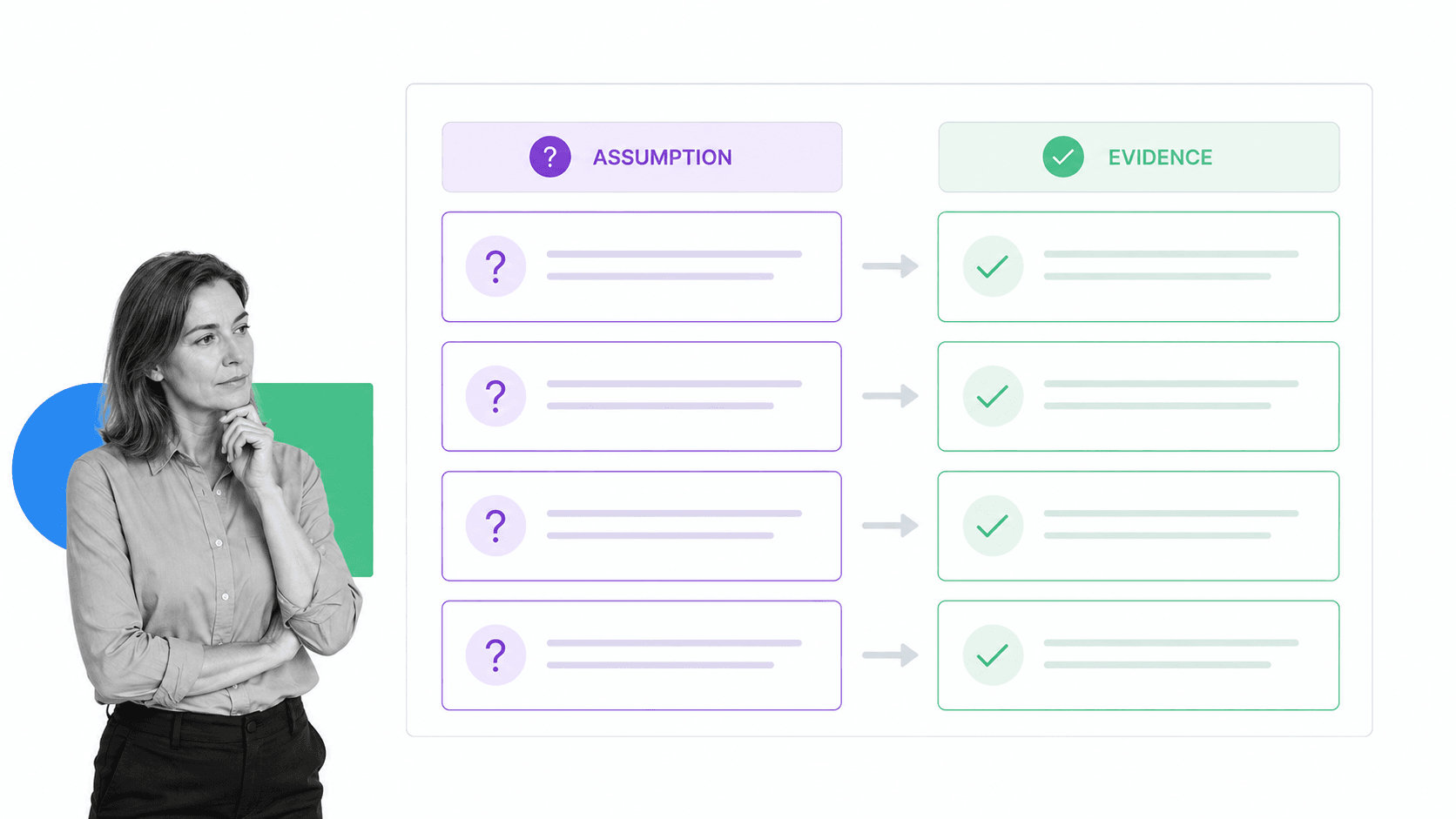
People make decisions throughout the day with limited time and attention. To process information quickly, the brain uses mental shortcuts. These shortcuts are known as biases and heuristics. Although there’s overlap, they’re two subtly different concepts. Biases systematically tilt judgment, while heuristics are practical rules of thumb that simplify a choice. The distinction is not always clean, but both can affect the evidence we notice and the alternatives we consider. Research by Amos Tversky and Daniel Kahneman established how judgment under uncertainty often relies on these shortcuts. To put it even simpler, cognitive biases are patterns of thought that aren’t logical, thus causing us to make illogical decisions. Heuristics, meanwhile, are more practical, let’s-get-things-done approaches that allow us to make decisions quickly, but don’t always have our best interests at heart. Here are two examples. With cognitive bias, a line manager could be prejudiced against a candidate, due to their ethnicity, age, gender, sexuality, or background, who’s applied for a position in their team. The cognitive bias puts this candidate at an immediate disadvantage due to how the line manager (incorrectly) presumes the candidate will act or be in the workplace. However, if the hiring process results in a deadlock between two candidates, and no more time can be wasted on the decision making process, then heuristics will allow the line manager to make a choice once and for all. No matter if the choice is, in hindsight, the wrong one. Making decisions is hard. That’s why our brains, both helpfully and unhelpfully, have created decision making shortcuts.Decision fatigue
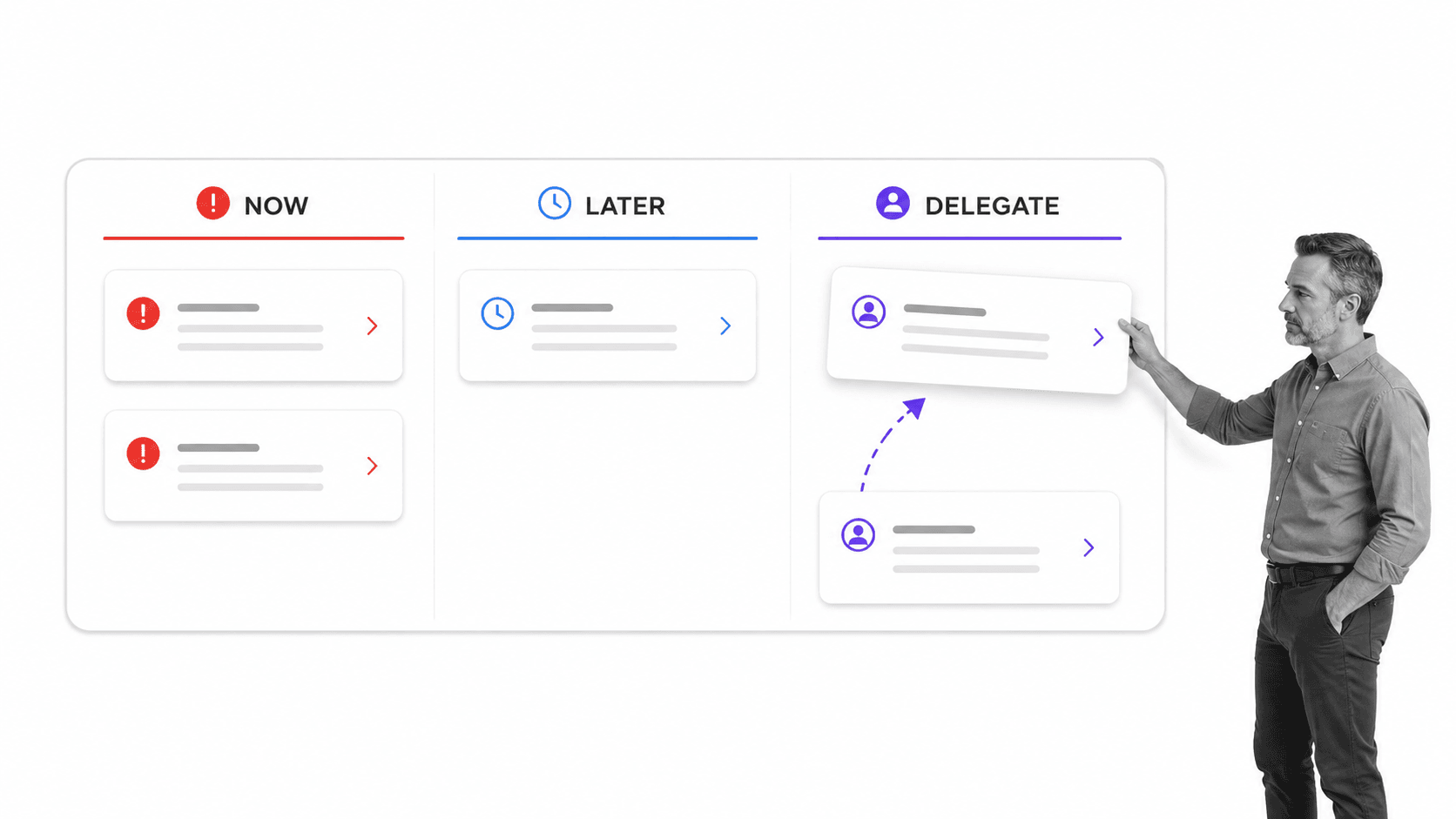
Decision fatigue describes the proposed idea that repeated choices can make later decisions feel harder. Research findings vary. When attention is low, reduce avoidable choices, separate urgent decisions from deferrable ones, and delegate choices that belong to someone else.
Choice overload is related but context-dependent. In a well-known supermarket study, Sheena Iyengar and Mark Lepper compared a display with 6 jams against one with 24. More people approached the larger display, but people exposed to the smaller set were more likely to buy. Later research shows that overload depends on the task, environment, and decision-maker, so the practical lesson is to design a manageable choice set rather than assume more or fewer options is always better.
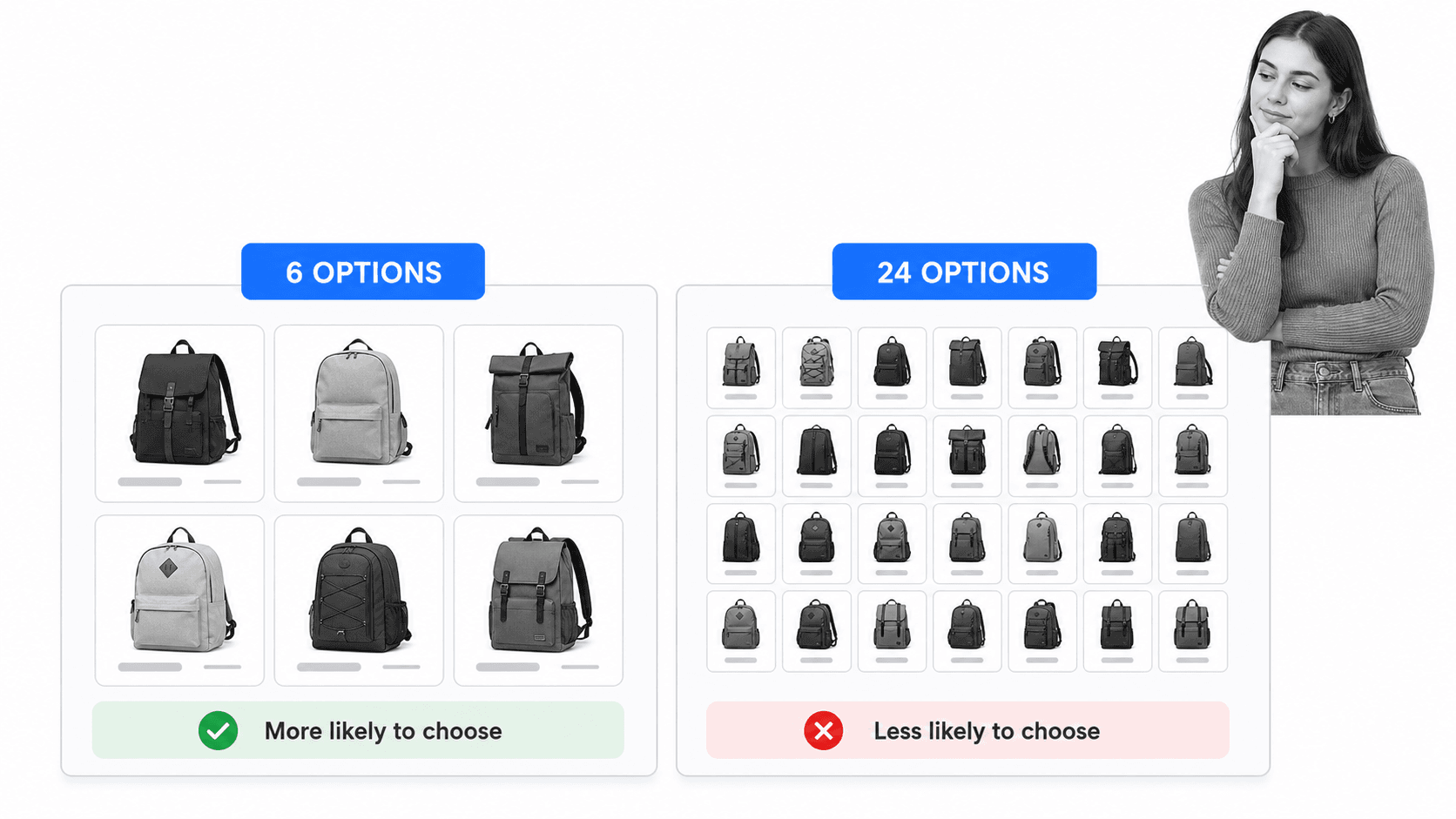
The original study is available through its DOI record. Barry Schwartz explains the broader idea in his Paradox of Choice talk.
Analysis paralysis
Analysis paralysis isn’t only a quippy, pithy term that suits song titles, and explored in singer-songwriter Jen Cloher‘s lyrics, but it’s also a scientific, psychological term for when overthinking halts us in our tracks. As explained further by the team at Investopedia:“Analysis paralysis can occur in both standard and complex problems. It is often the result of analysis that involves an undefined number of variables. […] Analysis paralysis may set in when an individual is unsure of the best practices for identifying an outcome. The situation or problem may also involve an undefined number of variables that result in an arbitrary outcome with a low degree of confidence. Thus, in some situations analysis paralysis may be the result of an undefined outcome. However, in many problem sets, analysis paralysis can be overcome by broadening the analytical practices used.”, Investopedia, How Analysis Paralysis WorksTo make good decisions, there needs to be some thought. This might sound painfully simple, but there’s thinking and then there’s overthinking. Overthinking takes us to a mental point where we’ve thought about a problem or issue to such an extent we’re afraid to act on it. As Jen Cloher herself sung:
“Paralyzed I’m paralyzed In paradise I’m paralyzed Worrying won’t change a thing In paradise […] Full of good intentions but never any action.”, Jen Cloher, Analysis ParalysisFrustratingly, analysis paralysis doesn’t just impact our ability to make decisions. Oh, no. It also lowers our performance when carrying out demanding tasks, halts our creativity, makes us unhappy, and even ushers us into a state of lowered willpower. Suffice to say, between cognitive biases and heuristics causing us to make decisions too quickly, and decision fatigue and analysis paralysis drawing out the decision making process for far too long, there’s a fine middle-ground in which our best decisions can be made. The DECIDE framework and process fit right between that intersection. (More on this in a few more paragraphs.)
Optimism
Look, I don’t want to be a pessimist and spoil everyone’s day, but optimism can, ironically and surprisingly, cause us to make terrible decisions. This is what’s known as optimism bias. The University of Bath’s Chris Dawson researched optimism bias and how it directly, and negatively, impacts entrepreneurs. Dawson’s research found that financial optimism can shape entrepreneurial earnings and satisfaction. The narrower conclusion matters here: optimistic forecasts can lead a decision-maker to underweight downside evidence. Basically, by being too optimistic about the future, decisions aren’t 100% grounded in reality, which can have rather nasty consequences. Optimism is not inherently bad. A meta-analysis links optimism with physical health, but a decision still needs realistic assumptions and evidence. However, a healthy dose of realism always helps to keep bad decisions at bay.Other elements that impact decision making
Decision conditions matter too. Stress can affect decision-making, with effects that vary by task and context. Sleep loss can also alter choices. Alcohol impairs judgment, and specific medications can affect particular decision processes. Check the evidence for the substance and situation instead of treating every influence as identical. So why should we make important decisions in life and business if our decision making skills are impaired? Answer: We shouldn’t. We should, instead, go about decision making properly. That’s why, to make the best decisions possible, you should have a decision making process that looks at all areas before that final decision is made. Introducing: DECIDE.What is the DECIDE model?
The DECIDE model is a six-step decision-making framework: Define the problem, Establish the criteria, Consider the alternatives, Identify the best alternative, Develop and implement an action plan, and Evaluate and monitor the result.
Professor Kristina L. Guo presented the model for healthcare managers as a way to structure complex decisions. The indexed paper describes each activity and emphasizes that managers still need critical thinking, collaboration, and communication. DECIDE improves consistency and reviewability. It does not guarantee the right answer.
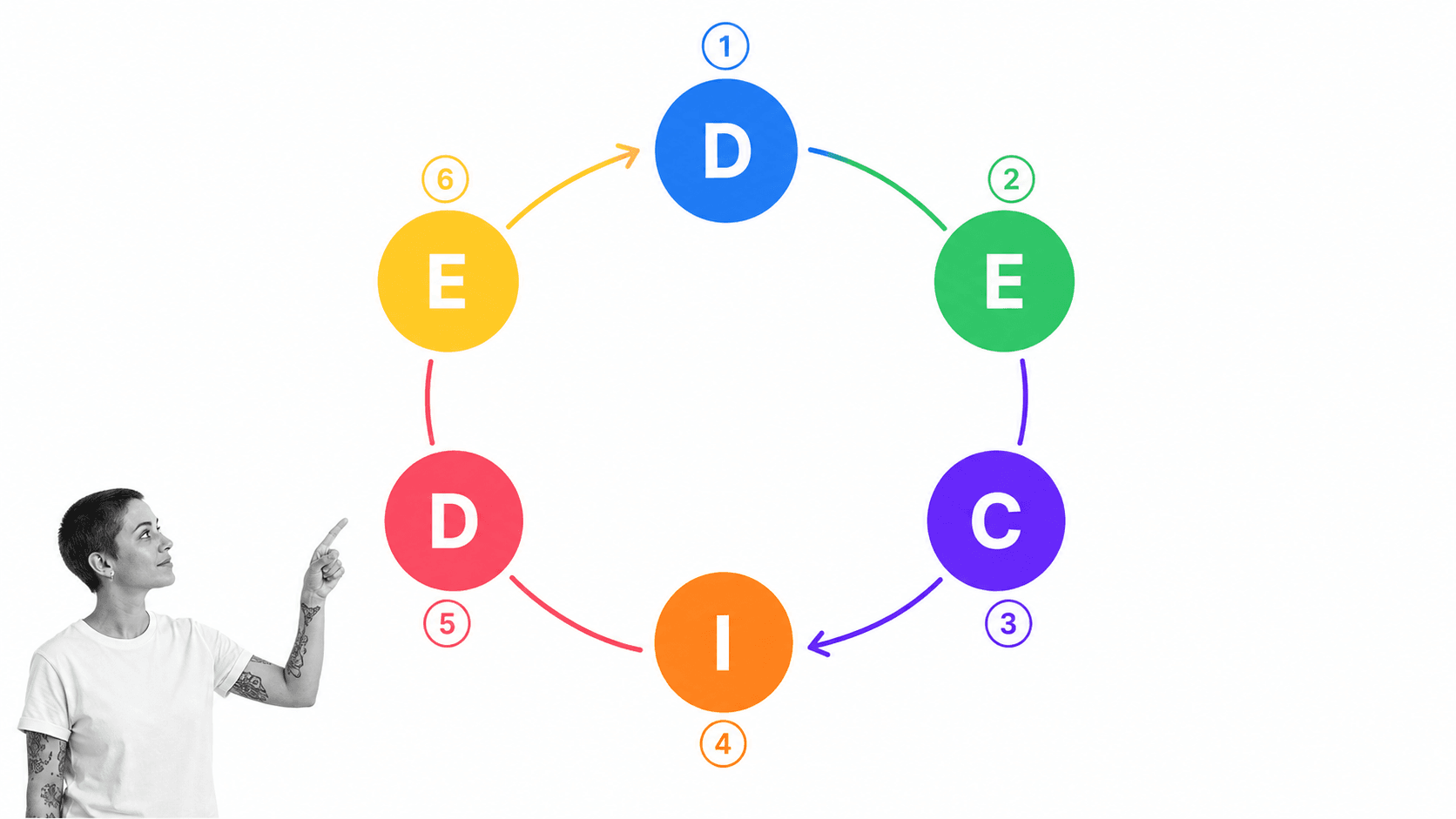
The 6 steps in DECIDE
Step 1 in DECIDE, define the problem
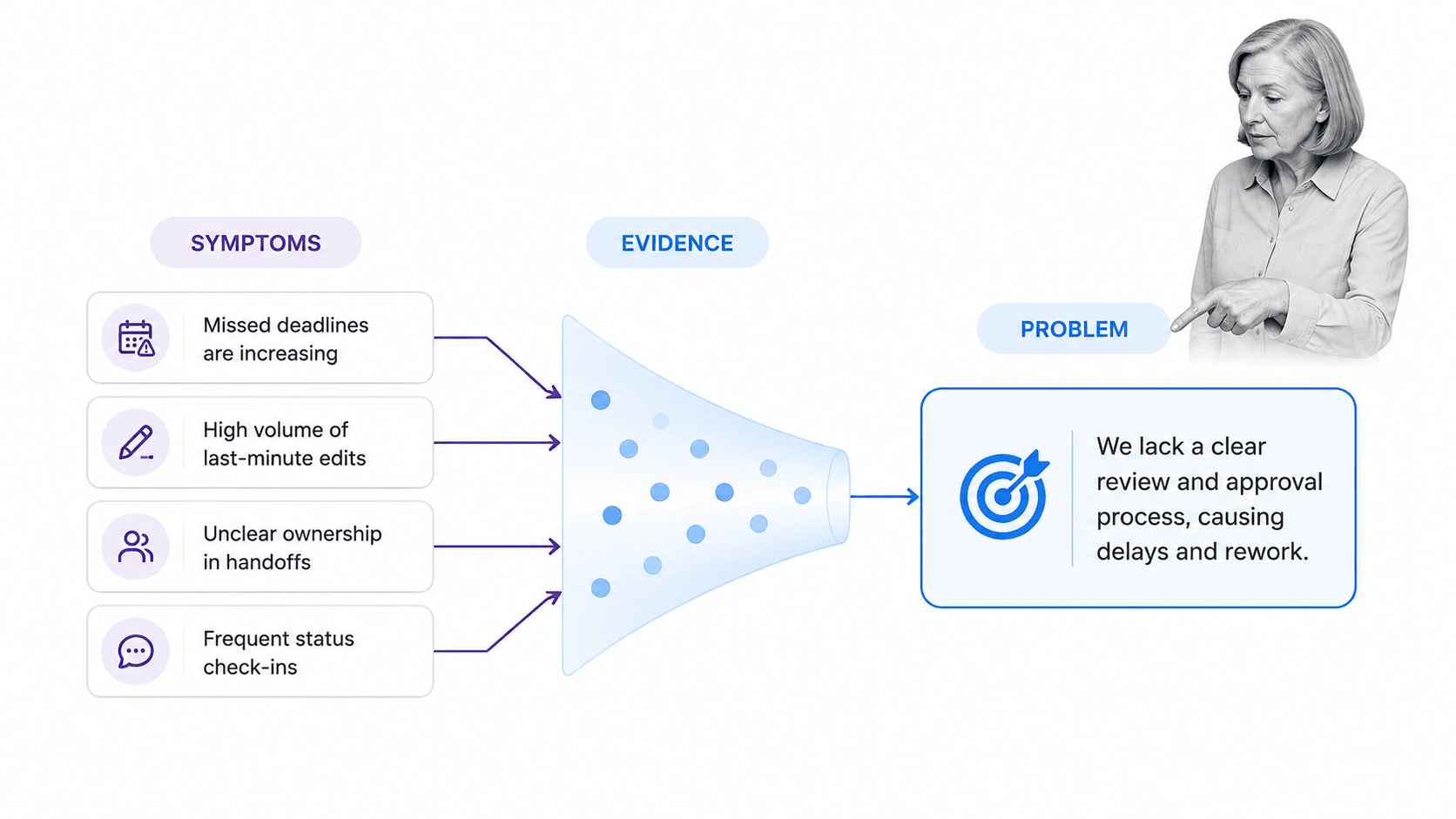
- The main question: What is the problem?
- Why is it a problem?
- Should something be done about it?
Step 2 in DECIDE, establish the criteria ✅
E refers to Establish the criteria. What this means is establishing what, exactly, you want to achieve and avoid with your decision. For instance, let’s say you’re a solopreneur. Things are going pretty darn well for your no-code SaaS product; you’ve just received an investment offer from a trustworthy angel investor! However, the equity they’re asking for is more than you hoped for or wanted. Analysis paralysis hits hard (as is often the case with decisions related to finances and investment) and stifles your decision making. But the clock’s ticking. By using this E step, you’ll ask yourself:- The main question: What do I want this decision to achieve?
- What do I want to avoid with my decision?
Step 3 in DECIDE, consider alternatives
C refers to Consider the alternatives. The word alternatives here is synonymous with options. With that in mind, the next part of the process is to ask yourself:- The main question: What possible options, choices, and alternatives meet the criteria?
Step 4 in DECIDE, identify the best alternative
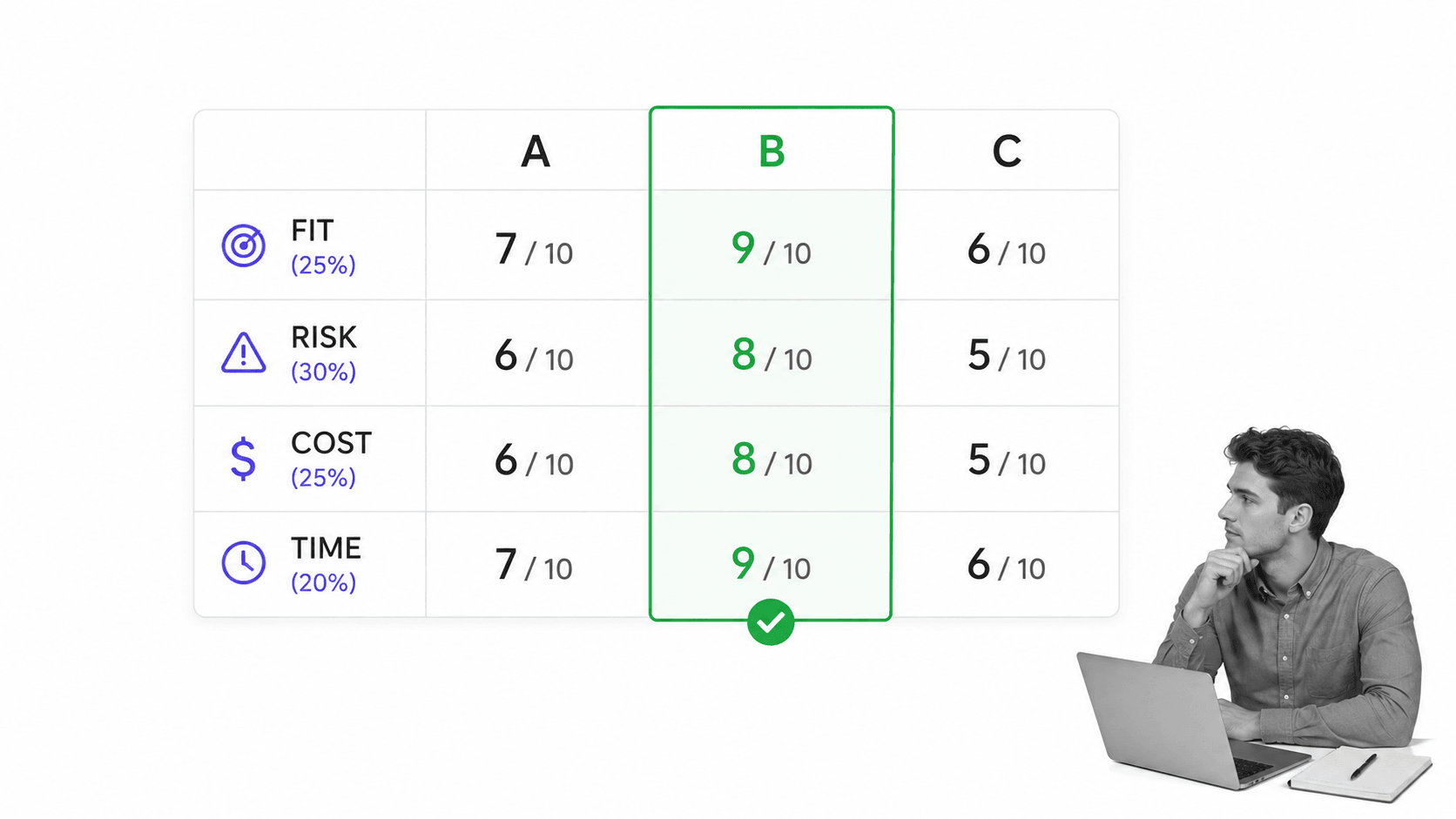
Step 5 in DECIDE, develop a plan of action
The second D prompts the user to Develop a plan of action. You’ve set your scope for what you wanted to achieve and avoid, you’ve made a list of possible decisions, and chosen the best option. It’s time to act. Develop a plan of action (How will the decision be made or announced? At what time? Where?) then follow through with it. Good luck!Step 6 in DECIDE, evaluate the solution
How does it feel having made the best decision possible? Pretty good, huh? The process isn’t quite over yet, though. The second E refers to Evaluate the solution. This basically means monitoring the outcomes of the decision. For you, the aforementioned hypothetical solopreneur, you asked for a reduction of money in trade for a slightly smaller amount of equity the investor originally asked for. This decision was the best possible outcome. You’ve secured a substantial amount of financial investment while also feeling comfortable with the amount of equity that was traded. By using the DECIDE framework, you didn’t let analysis paralysis win, let emotions lead you to a bad decision, or give up the ghost and abandon the whole thing. Instead, there was intelligent decision making.How to make decisions in life and business with DECIDE
As you can see, DECIDE is pretty darn useful. However, this might be the point where you’re thinking “But I’m not a solopreneur! How will I ever use DECIDE in my daily life?”. The beauty of DECIDE is that it can be used in pretty much any tough situation where you have to make a decision. To help you out, here are 2 examples of where DECIDE can be used in life and business alike.Buying software for your organization
Choosing software is a durable DECIDE example because a crowded market creates real tradeoffs. A growing team may need a CRM tool, but the process works for any operational system.
- Define: State the operational problem, such as customer information spread across spreadsheets, inboxes, and individual memory.
- Establish: Set criteria before viewing demos. Include security, integration coverage, implementation effort, governance, usability, reporting, and total cost.
- Consider: Build a short list that meets the non-negotiable requirements.
- Identify: Compare the same evidence across every option. Weight the criteria and document why one alternative wins.
- Develop: Assign an owner, migration plan, training sequence, risk controls, and launch date.
- Evaluate: Review adoption, data quality, cycle time, support burden, and whether the original problem improved.
The goal is not to find a perfect tool. It is to make the tradeoffs explicit, preserve the evidence, and create a plan that can be evaluated after implementation.
Deciding which location to move to
Location flexibility can create a difficult decision because cost, community, work, and quality of life pull in different directions. Thom James Carter, the original author of this article, used DECIDE when choosing between Canada, Greece, and Edinburgh. I’m originally from the south of Britain, so Edinburgh and Canada were the most liveable options, I could already speak the dominant language. However, Greece was, by far, the most price-performing (and warmer) option. Needless to say, I had a conundrum on my hands. That’s why I used DECIDE. Below, you can read the exact notes I wrote down while progressing through DECIDE’s 6 steps. Take a look for yourself:- D: There are 3 places I’ve always wanted to live, but have never had the opportunity to: Canada, Greece, and Edinburgh. With my new job at Process Street, which operates as a virtual team, I can move to one of these places.
- E: The criteria: It mustn’t be a location I’ve ever lived in before. The location should have affordable rent, my rent cannot be more than half of my monthly earnings. It must be in a city or well-serviced town so if the internet goes down, I can quickly hop to a café and work from there.
- C: (1) Move to Canada (ideally Toronto) where I don’t know anyone but, considering its population and the people who live there, it shouldn’t be too hard to make friends. (2) Move to Edinburgh where I know people, have family, and from previous visits know I’ll enjoy living there. (3) Move to Greece, which is the wild-card. I don’t know anyone in Athens, but it’s so, so inexpensive.
- I: (2) Move to Edinburgh where I know people, have family, and from previous visits know I’ll enjoy living there.
- D: I’ve started looking at apartments immediately because I know the rental market is incredibly fast-paced. I’ll start messaging the friends I have there to see if they know of anything available.
- E: I’ll do everything in my power to make sure the move is as seamless as possible. If I don’t enjoy Edinburgh in the long-term, I can always try one of the other two locations!
Using Process Street to make and execute decisions
Process Street is a Compliance Operations Platform. It is one product with Docs and Ops capability areas plus built-in AI.
Docs gives teams a governed place for decision policies, criteria, evidence standards, and final records. Ops turns those rules into a repeatable decision workflow with required fields, owners, due dates, routing, approvals, and follow-up tasks. Built-in AI can help summarize evidence and find relevant knowledge inside those controls, while people remain accountable for the decision.
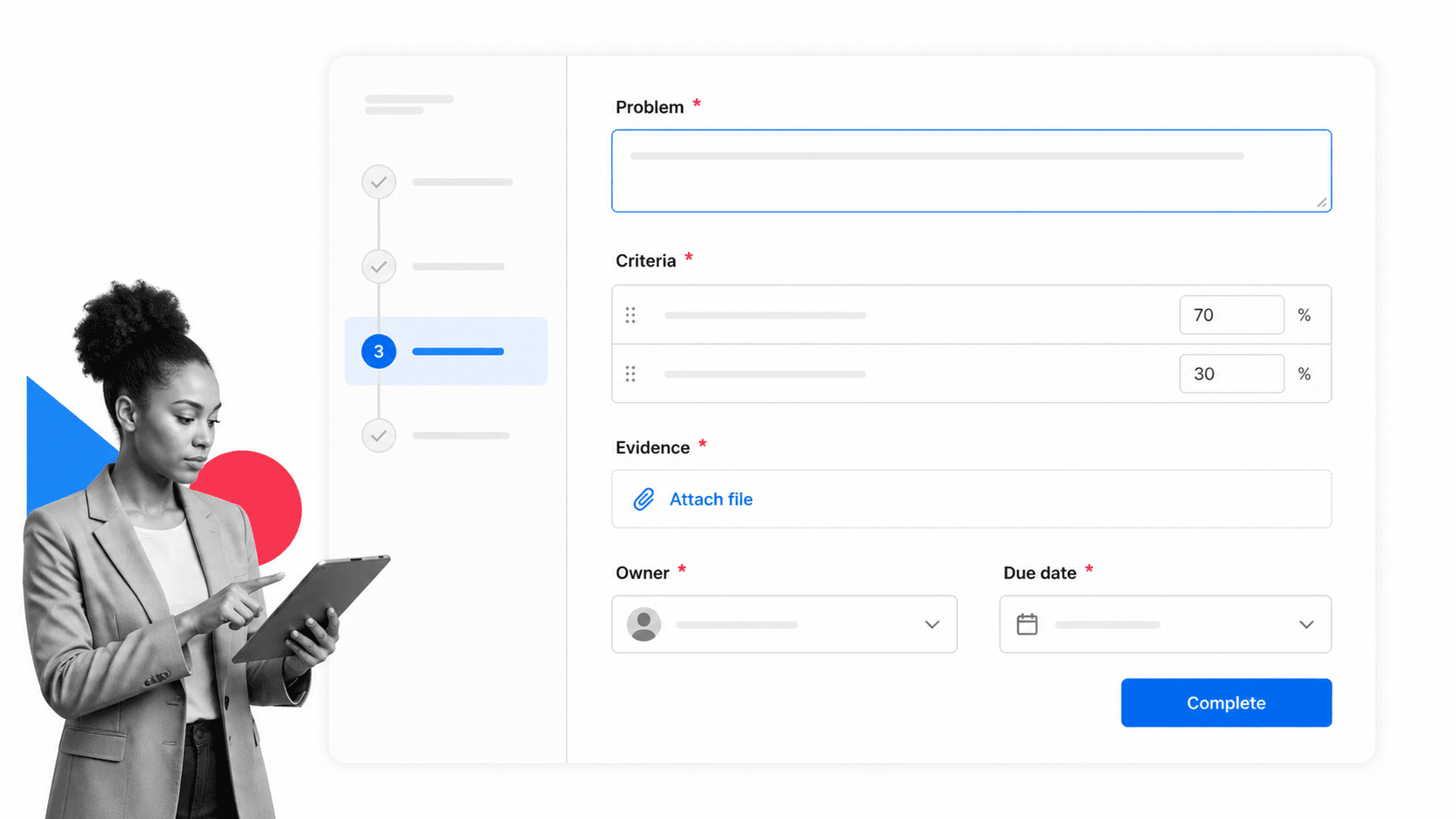
A DECIDE workflow can capture the problem, require criteria before alternatives are compared, store supporting evidence, assign an approver, and launch the action plan once a choice is approved. For higher-stakes choices, connect those steps to a documented approval workflow so the criteria, reviewer, outcome, and evidence stay together.
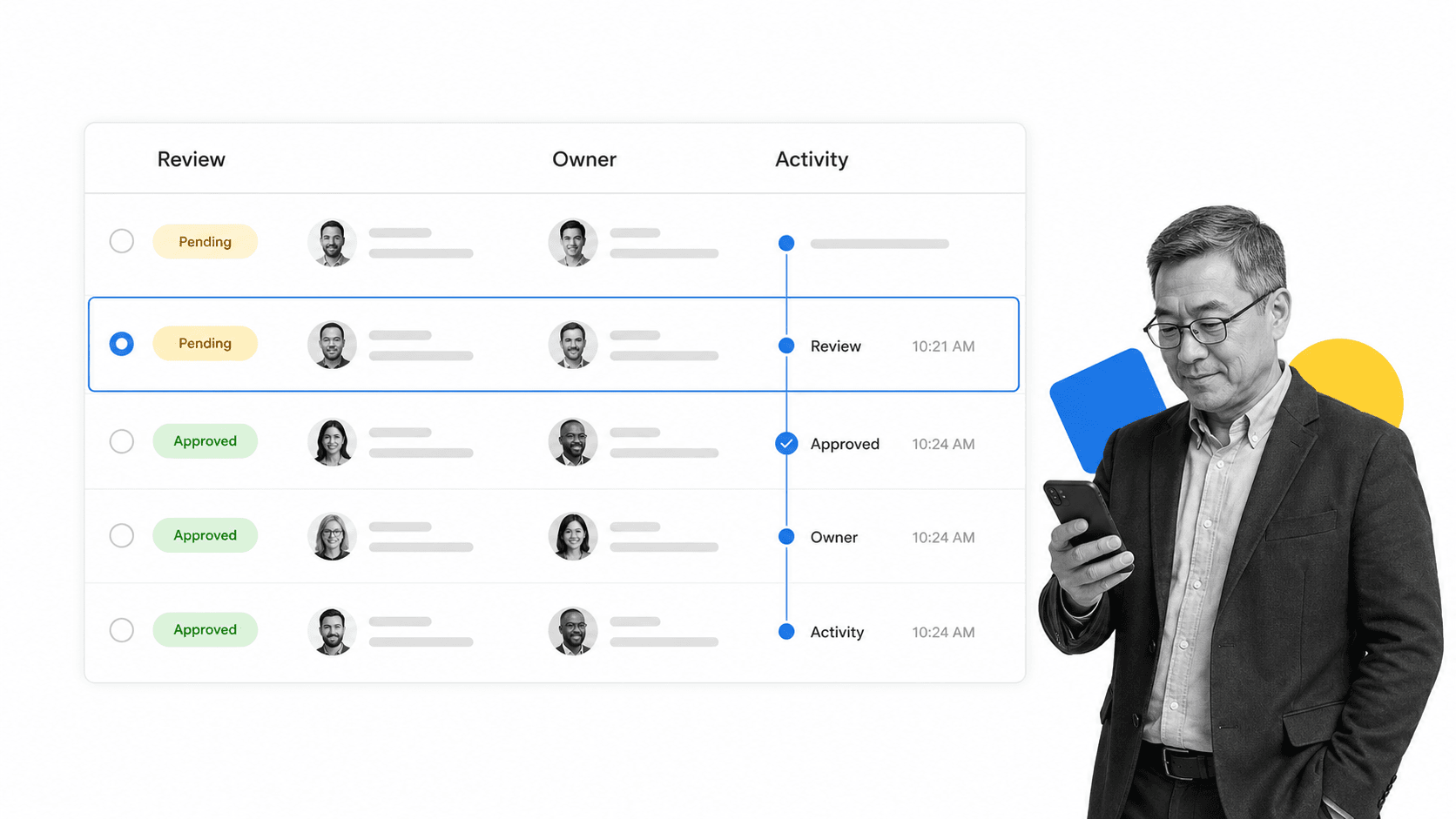
Evaluation closes the loop. The same workflow can schedule a review, compare the result with the original criteria, record lessons, and trigger corrective action when the choice does not perform as expected.
Additional resources for making intelligent decisions
- Approvals: How to Streamline Decision-Making in Process Street
- Choice Architecture Explained
- Prioritization Matrix 101
- 8 Proven Change Management Models to Scale Like a Pro
DECIDE model FAQs
What does DECIDE stand for?
DECIDE stands for Define the problem, Establish the criteria, Consider the alternatives, Identify the best alternative, Develop and implement an action plan, and Evaluate and monitor the result.
How many steps are in the DECIDE model?
The DECIDE model has six steps, one for each letter in the acronym.
What is the first step in the DECIDE model?
The first step is to define the problem. State the decision clearly, identify why it must be made, and separate the underlying problem from its visible symptoms.
When should you use the DECIDE model?
Use DECIDE for structured, medium-to-high-stakes choices where you have time to define criteria, compare alternatives, plan implementation, and review the outcome. It is less useful during an emergency that requires an immediate response.